Safety & Compliance
Sea Moss and Thyroid Medication: Why We Ask You to Speak to Your GP First
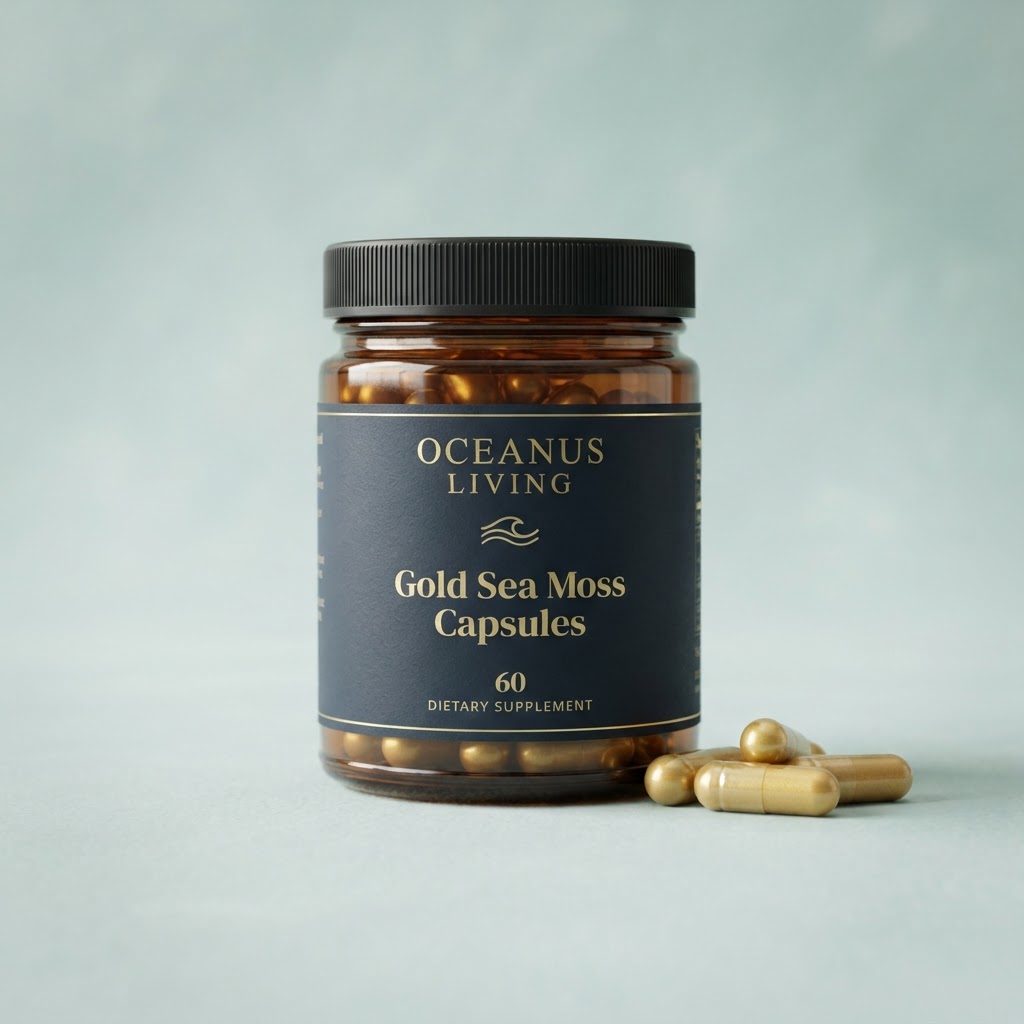
Sea moss contains iodine, and iodine is directly relevant to thyroid function. Why that means a conversation with your GP or pharmacist, not an article, comes first.
In this article
If you have searched sea moss thyroid questions, you have probably found strong opinions and very little caution. This page is the cautious version. Sea moss is a seaweed, seaweeds contain iodine, and iodine is directly relevant to how the thyroid works — which is exactly why, if you have a thyroid condition or take thyroid medication, the right next step is a conversation with your GP or pharmacist rather than an article.
Nothing here is medical advice, and nothing here is a reason to change any medication you take.
Iodine and the thyroid
There is one authorised claim we may make on this subject, and it is this: iodine contributes to normal thyroid function.
That is the whole of it. It is a statement about iodine as a dietary nutrient, in the context of normal function. It is not a claim that iodine treats a thyroid condition, that more iodine produces better thyroid function, or that a seaweed product does anything for an underactive or overactive thyroid.
The other authorised iodine claims, for completeness, are that iodine contributes to normal cognitive function, to normal energy-yielding metabolism, to the maintenance of normal skin, and to the normal functioning of the nervous system. Those are the only permitted benefit statements, they concern iodine rather than sea moss as a whole, and we are not going to stretch them.
In the UK, most people get iodine from dairy, fish and eggs. Iodine is an essential nutrient, which is why it appears on labels with a Nutrient Reference Value of 150µg a day.
Why more iodine is not better
This is the part the internet consistently gets wrong. With iodine, the useful range has a top as well as a bottom, and going past it is not a matter of diminishing returns — regulators set an upper limit for a reason.
The numbers worth knowing:
- 150µg a day — the labelling Nutrient Reference Value for adults
- Up to 500µg a day from supplements — NHS guidance is that this is unlikely to cause harm
- 600µg a day from all sources combined — EFSA's tolerable upper intake level for adults
Two things follow. First, add up everything you take: a multivitamin, a kelp tablet, a greens powder and a sea moss product can each contain iodine, and people rarely total them. Second, treat stated servings as limits rather than starting points. Doubling a serving because you missed a day moves you in the wrong direction.
Iodine content in seaweed is also highly variable — species, growing water, season and processing all change it — which is why we do not print one universal figure. The tested amount for your batch is on the label and in our published results, explained further in our guide to sea moss and iodine.
If you have a thyroid condition or take thyroid medication
Speak to your GP or pharmacist before using sea moss or any other seaweed product. That applies if you:
- have an underactive or overactive thyroid
- take levothyroxine or any other thyroid medication
- have thyroid nodules, a goitre, or autoimmune thyroid disease
- have had thyroid surgery or radioiodine treatment
- are being monitored with blood tests for thyroid function
- are due to have a scan or test involving iodine or contrast dye
We are a food business, not a clinical service. We cannot tell you whether sea moss is appropriate for you, we cannot advise on your medication, and we will not guess — your prescriber has your history, your test results and your current dose, and we have none of those things. A pharmacist can review your full list of medicines and supplements in a few minutes, free, without an appointment.
One thing we want to be completely unambiguous about: sea moss is not an alternative to prescribed thyroid medication, and it is not a treatment for any thyroid condition. If anything you have read online suggests otherwise, disregard it, and do not stop or change a prescription without speaking to the person who prescribed it.
If you have been told to watch your iodine intake, or to follow a low-iodine diet before a procedure, seaweed products are usually relevant to that instruction — another reason to ask before starting.
Pregnancy and breastfeeding
Iodine requirements differ during pregnancy and breastfeeding, and this is a period where getting intake right matters and where guesswork is a poor approach.
Speak to your GP, midwife or pharmacist before using sea moss if you are pregnant, breastfeeding or trying to conceive. Many pregnancy multivitamins already contain iodine, so it is worth having your whole supplement list to hand for that conversation.
The same goes for children. We do not market sea moss for children, and if you are considering giving it to a child, ask a GP or pharmacist first — dosing for children is not a matter of scaling down an adult serving.
What we put on the label, and why
Our approach is to give you the actual numbers and let a professional interpret them for you.
On the jar you will find the serving size — 2 tablespoons (30g) a day for the gel, and for capsules the daily dose as stated on the label — the batch number, the iodine content for that batch, and a plain warning to consult a doctor or pharmacist if you have a thyroid condition, take thyroid medication, or are pregnant or breastfeeding, alongside the standard statement that food supplements should not replace a varied, balanced diet and healthy lifestyle, and that the stated dose should not be exceeded.
What you will not find on our label or on this site: a claim that sea moss helps, improves, balances, regulates, boosts or fixes anything about your thyroid. Not because we are being coy, but because such claims are not authorised and would not be true.
We test the finished gel batch by batch, not the dry moss, because soaking and blending change every figure — and we publish the result so you or your pharmacist can see the iodine content per serving for the exact jar in your hand. That is on our Lab Results page, and if you want the full certificate of analysis for your batch, ask and we will send it.
Take that number to your appointment. It is the single most useful thing you can bring to the conversation.
Oceanus Living
See the lab results
Heavy-metal and iodine results for the current batch, with laboratory, batch number and test date.
View lab resultsFrequently Asked Questions
Related
[FOUNDER NAME]
Written and reviewed by the Oceanus Living team for accuracy and UK compliance.
Last updated 25 August 2026
This article is for general information only and is not medical advice. Food supplements should not replace a varied, balanced diet and healthy lifestyle. Oceanus Living products are not intended to diagnose, treat, cure or prevent any disease or condition. If you are pregnant, breastfeeding, taking medication, have a thyroid condition, or are considering use for a child, speak to a qualified healthcare professional first.