Safety & Compliance
Is Sea Moss Safe? Heavy Metals, Iodine and What Testing Actually Checks
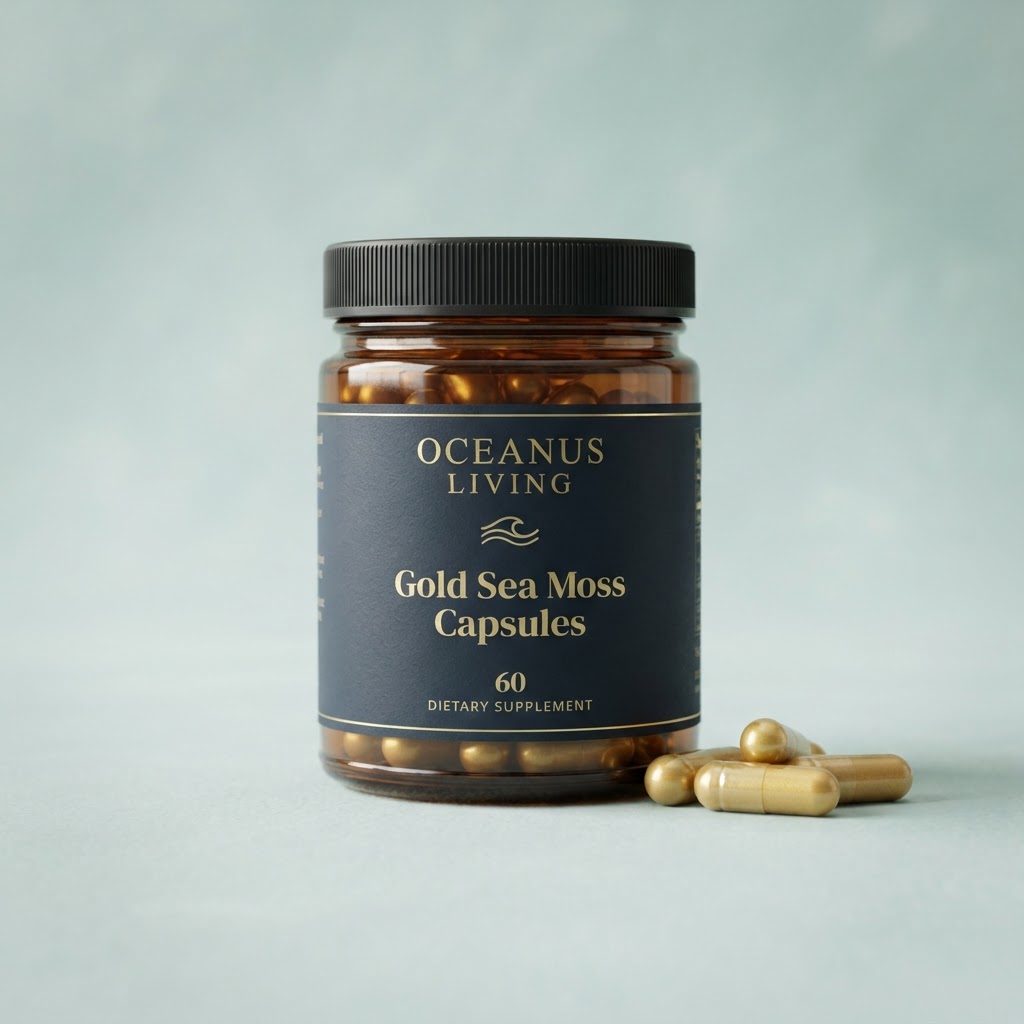
Sea moss is a seaweed, so it takes up what is in the water around it. Here is what a laboratory checks, what a Certificate of Analysis proves, and how to store fresh gel safely.
In this article
Is sea moss safe? For most healthy adults, used at the serving size on the label, it is a food that has been eaten in the Caribbean for generations. But it is a seaweed, and seaweeds concentrate whatever is in the water around them — which makes two things worth understanding properly: heavy metals and iodine. This page explains what a laboratory actually checks, what the limits are, what a certificate of analysis does and does not tell you, and how to handle fresh gel safely once it is in your fridge.
Why seaweed absorbs what is in the water
Seaweed has no roots and no soil. It takes up minerals directly from seawater across its whole surface, which is why it is naturally rich in minerals — and why it can also take up trace metals that happen to be present. Nothing about that is sinister; it is simply how the plant works. It does mean the growing environment matters enormously, and that where a seaweed is grown, and how, tells you more about its likely purity than any marketing copy.
Two details make a practical difference. First, ocean-grown moss on lines sits in open water away from the sediment and run-off that collects around rocks and shorelines. Ours is grown on lines in St Lucia by licensed farmers, then sun-dried on the island. Second, testing has to happen after processing, not before, because rinsing, soaking and blending all change the finished figures. Ours is prepared and batch-tested in Kent. You can read the full route on our sourcing page.
The four heavy metals a laboratory looks for
Testing on a seaweed food or supplement normally covers four elements, sometimes called the "big four":
- Lead
- Cadmium
- Mercury
- Arsenic — often reported as total arsenic, and sometimes as inorganic arsenic, which is the form of greater concern
In Great Britain, maximum levels for contaminants in food are set in retained legislation, with specific limits for food supplements. Rather than reprint numbers that could drift out of date, we publish each batch's results next to the applicable limit so you can see the margin for yourself, and the specific limits our laboratory reports against are shown with the results on our Lab Results page.
What matters when you read a set of results is not just "pass". It is the size of the gap. A result well under the limit is a different proposition from one sitting just beneath it, and a brand confident in its supply chain will show you the number rather than a tick.
Iodine: the "too much" problem
Heavy metals are the risk people expect. Iodine is the one that actually catches people out, because it is a nutrient rather than a contaminant, and because the sensible range has a top as well as a bottom.
The authorised claims for iodine are narrow and specific: iodine contributes to normal thyroid function, to normal cognitive function, to normal energy-yielding metabolism, to the maintenance of normal skin, and to the normal functioning of the nervous system. Those statements are about iodine as a nutrient, and they describe normal function — not a case for taking as much as possible.
The numbers you need: the labelling Nutrient Reference Value is 150µg a day, the NHS advises that up to 500µg a day from supplements is unlikely to cause harm, and EFSA's tolerable upper intake level is 600µg a day from all sources combined for adults. If you take a multivitamin, a kelp tablet or any other seaweed product alongside sea moss, add them together before comparing.
Because iodine in seaweed varies by species, water, season and processing, we do not print a generic figure. The tested value for your batch is on the jar and on the Lab Results page. There is a fuller explanation of why the variation is so wide in our guides to sea moss and iodine and sea moss and thyroid medication.
What a Certificate of Analysis shows, and what it does not
A Certificate of Analysis (CoA) is a laboratory document reporting what was measured in a specific sample. A useful one names the product, the batch, the date, the tests performed, the methods and the results.
What it does not do is quite a long list, and worth knowing:
- It does not cover other batches. A CoA from last year says nothing about the jar in your hand. Ask whether testing is per batch or one-off.
- It does not necessarily describe the finished product. A certificate for dry raw material tells you about the seaweed a brand bought, not the gel they made. We test the finished gel.
- It does not prove anything a badge implies. A "lab tested" graphic on a website is not a document. Ask for the certificate.
- It does not check everything. A CoA reports the tests that were requested. If iodine was not requested, iodine is not on it.
If you want the full certificate for your batch rather than the published summary, ask us and we will send it.
Fresh gel and food safety
Our gel is a fresh food with no preservatives, which is the reason it needs a fridge and a use-by date rather than a two-year shelf life.
- Keep it refrigerated from the moment it arrives, and put it back promptly after serving.
- Use a clean, dry spoon every time. Wet or previously used spoons are the fastest way to introduce spoilage.
- Observe the use-by date on the jar, and the after-opening guidance printed alongside it.
- You can freeze it if you will not finish a jar in time — portioning into an ice-cube tray works well, and a cube thaws in the fridge overnight.
Signs a jar has turned: a sour or fermented smell, fizzing or bubbling, visible mould, a colour shift or a watery separation that will not stir back together. Do not taste to check — if it looks or smells wrong, bin it and tell us.
Five questions to ask any sea moss brand
- What species is it, and where was it grown? A brand that cannot answer, or that says "Irish moss" while selling tropical moss, has not looked closely at its own supply chain.
- Do you test every batch, or was it tested once? Per-batch testing is the whole point.
- Do you test the finished product or the raw material? Only one of those describes what you are eating.
- What is the iodine content per serving of this batch? Vagueness here is a red flag.
- Can I see the Certificate of Analysis for my batch number? The answer should be an immediate yes.
Who should get advice first
Speak to a GP or pharmacist before using sea moss if you have a thyroid condition of any kind, take thyroid medication, are pregnant or breastfeeding, are considering it for a child, or already take another supplement containing iodine, kelp or seaweed. We cannot advise on medication or on your individual circumstances, and a pharmacist can review the whole picture quickly.
For the current batch results, start with the Lab Results page.
Oceanus Living
See the lab results
Heavy-metal and iodine results for the current batch, with laboratory, batch number and test date.
View lab resultsFrequently Asked Questions
Related
[FOUNDER NAME]
Written and reviewed by the Oceanus Living team for accuracy and UK compliance.
Last updated 25 August 2026
This article is for general information only and is not medical advice. Food supplements should not replace a varied, balanced diet and healthy lifestyle. Oceanus Living products are not intended to diagnose, treat, cure or prevent any disease or condition. If you are pregnant, breastfeeding, taking medication, have a thyroid condition, or are considering use for a child, speak to a qualified healthcare professional first.