Safety & Compliance
Sea Moss and Iodine: How Much Is in a Serving, and Why It Matters
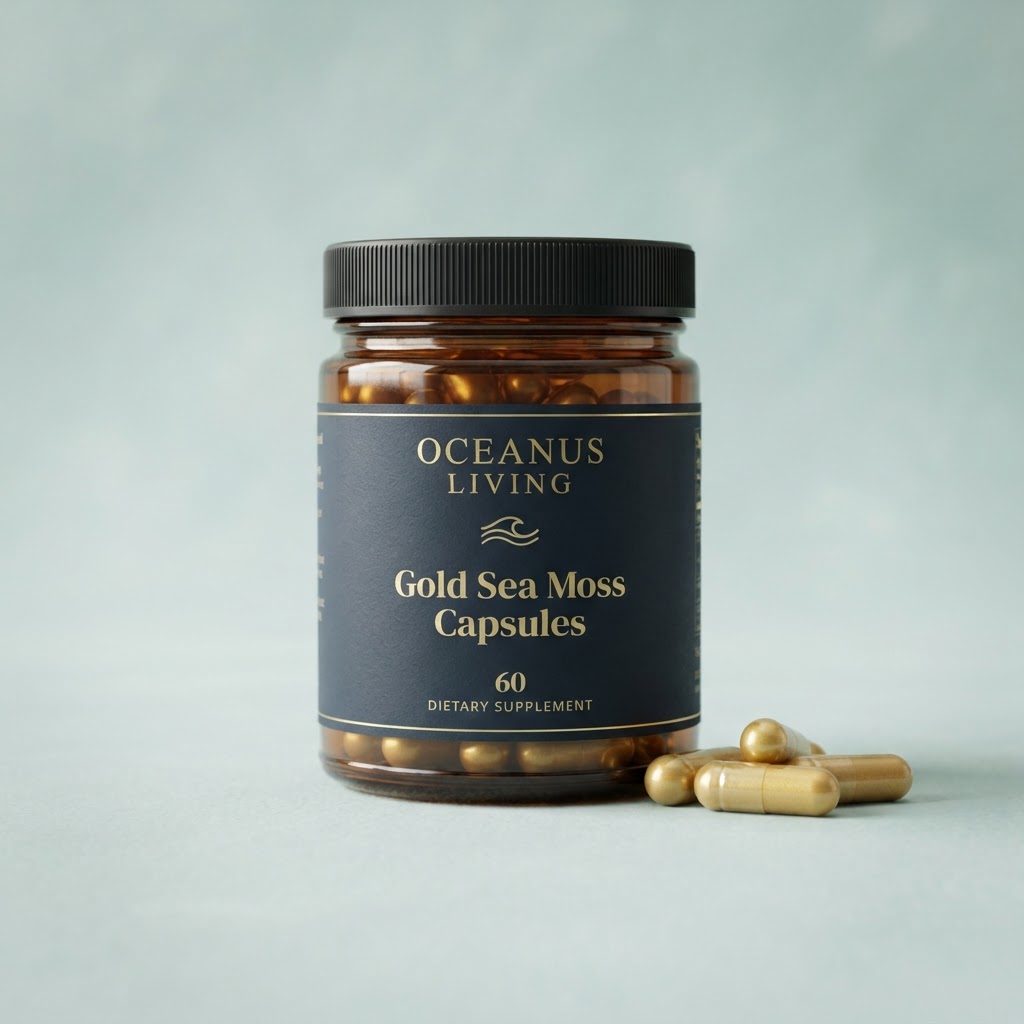
Sea moss iodine content varies by species, water and season. Here is what iodine does, what the UK guidance says, and how to check the tested figure for your batch.
In this article
Sea moss iodine content is the single most important thing to understand before you start using sea moss, and it is the thing most brands say least about. Sea moss is a seaweed, seaweeds concentrate iodine from the water they grow in, and iodine is a nutrient where both too little and too much matter. This page explains what iodine actually is, why the amount in sea moss varies so much, what the UK guidance says, and how to read our batch results rather than trusting a round number printed on a label.
What iodine does in the body
Iodine is an essential mineral, which means your body cannot make it and has to get it from your diet. In Great Britain, the health claims that may be made about nutrients are set out in a register, and iodine has several authorised claims. These are the only benefit statements we are permitted to make, and they apply to iodine as a nutrient — not to sea moss as a product:
- Iodine contributes to normal thyroid function
- Iodine contributes to normal cognitive function
- Iodine contributes to normal energy-yielding metabolism
- Iodine contributes to the maintenance of normal skin
- Iodine contributes to the normal functioning of the nervous system
That is the complete list, worded as authorised. You will see sea moss described online in far more dramatic terms than that. Treat those descriptions as marketing rather than fact, and be particularly wary of any brand telling you a seaweed will fix a named condition.
It is also worth being clear about what these claims are not. They describe iodine's role in normal function. They do not say that taking more iodine improves anything, and they are not a reason to take a large dose. Iodine is a nutrient with a sensible range, and staying inside that range is the whole point of paying attention to it.
How much iodine is in sea moss, and why sea moss iodine content varies
There is no single figure for sea moss, and any brand quoting one without a batch reference is guessing. Four things move the number:
Species. Different seaweeds concentrate iodine to very different degrees. Our sea moss is [SPECIES], grown on lines in St Lucia. Brown seaweeds such as kelp and kombu are in a different league again — they are typically far higher in iodine than the tropical species used for sea moss gel. This is one reason it matters that a brand tells you the species at all. Ours is stated on our sourcing page.
Growing conditions. Iodine uptake depends on the water the moss grows in, the depth of the lines, water temperature and the time of year it is harvested. Two harvests from the same farm, months apart, will not be identical.
Processing. Sun-drying, rinsing and soaking all affect the final figure. Iodine is water-soluble, so a proportion leaves the moss during soaking and washing.
Dry weight versus gel. This is where most confusion comes from. A figure for 100g of dried sea moss is not remotely the same as a figure for a serving of gel. A 500ml jar of our gel is roughly 30g of dried moss blended with spring water, and a serving is 2 tablespoons (30g) of that finished gel. So a serving of gel contains a small fraction of the dried moss the jar was made from. If someone quotes you a scary number, check whether they are talking about dry seaweed powder or a spoon of gel.
The UK numbers you actually need
Three reference points are worth knowing.
The Nutrient Reference Value (NRV) for iodine is 150µg per day. This is the labelling reference used across the UK and EU, and it is the figure a "% NRV" on any supplement label is calculated against. It is a labelling benchmark for the general adult population, not a target you must hit from supplements.
The NHS advises that taking up to 500µg of iodine a day from supplements is unlikely to cause harm. That is guidance for supplemental intake, sitting on top of whatever you get from food — dairy, fish and eggs are the main dietary sources in the UK.
EFSA set a tolerable upper intake level of 600µg a day for adults. This is a total daily ceiling from all sources combined, set with a safety margin, and it is the figure regulators work from.
Read together, these say something simple: iodine is a nutrient you want in a sensible range rather than in the largest dose you can find. That is why we would rather tell you the tested figure for the batch in your hand than print an impressive-sounding number.
Why seaweed supplement labels are often unreliable
Iodine content in seaweed products has been a known problem for years, and the reason is straightforward. If a brand buys dried moss from a wholesaler, uses a generic figure from a database or a supplier's spec sheet, and prints it on every label regardless of the batch, that number describes an average of somebody else's seaweed rather than the product you bought. Nothing about that process involves testing what is actually in the jar.
We do it the other way round. Our moss is ocean-grown on lines in St Lucia by licensed farmers, sun-dried on the island, then prepared and batch-tested in Kent. We test the finished product — the gel as you receive it — rather than the dry moss, and we test each batch rather than testing once and reusing the number forever. Testing the finished gel is the only way to describe what a serving actually delivers, because everything that happens between dry moss and sealed jar changes the answer.
We are not going to state a per-serving iodine figure on this page, because a figure that is not tied to your batch is not useful. The iodine content for the current batch is on the jar label and on our Lab Results page, alongside heavy-metal results, the batch number and the test date.
How to read our batch results
Each batch has a number printed on the jar. Match it to the entry on the Lab Results page and you will see:
- The batch number and the date it was tested
- Iodine per stated serving, in micrograms, and as a percentage of the 150µg NRV
- Heavy-metal results for that batch
- The laboratory that carried out the testing [CHECK]
Two practical points. First, work from the serving, not the jar: the number that matters is what is in your 2 tablespoons, not what is in 500ml. Second, if you also take a multivitamin, a kelp supplement or anything else containing iodine, add them together before comparing against the guidance above. Stacking several iodine-containing supplements is the easiest way to go well past a sensible intake without noticing.
If you want the full certificate of analysis for your batch rather than the summary, ask us and we will send it.
Who should get advice first
Some people should not work this out alone. Speak to a GP or pharmacist before using sea moss if you:
- have a thyroid condition of any kind, including an overactive or underactive thyroid, nodules or a history of thyroid surgery
- take thyroid medication — we cannot advise on medication, and this is a conversation for your prescriber
- are pregnant or breastfeeding, when iodine requirements differ
- are considering giving sea moss to a child
- are due to have a medical scan or test involving iodine or contrast dye
- take any other supplement containing iodine, kelp or seaweed
That list is not us being cautious for the sake of it. Iodine is genuinely a nutrient where individual circumstances change the answer, and a pharmacist can check your whole picture in a few minutes for free.
The short version
Sea moss iodine content varies by species, water, season and how the product was made, so a single universal figure does not exist. The UK reference is 150µg a day, NHS guidance is that up to 500µg a day from supplements is unlikely to cause harm, and EFSA's total ceiling is 600µg. Our approach is to test the finished gel batch by batch and publish the result, so you can check the actual figure for your jar rather than trusting an average.
Start with the label and the Lab Results page. If a thyroid condition or medication is part of your picture, read sea moss and thyroid medication first. If you are choosing between formats, our sea moss gel states the serving size clearly on the jar, so you always know what one serving is.
Oceanus Living
See the lab results
Heavy-metal and iodine results for the current batch, with laboratory, batch number and test date.
View lab resultsFrequently Asked Questions
[FOUNDER NAME]
Written and reviewed by the Oceanus Living team for accuracy and UK compliance.
Last updated 25 August 2026
This article is for general information only and is not medical advice. Food supplements should not replace a varied, balanced diet and healthy lifestyle. Oceanus Living products are not intended to diagnose, treat, cure or prevent any disease or condition. If you are pregnant, breastfeeding, taking medication, have a thyroid condition, or are considering use for a child, speak to a qualified healthcare professional first.