Sea Moss Basics
Sea Moss Gel vs Capsules: Which Format Suits Your Routine?
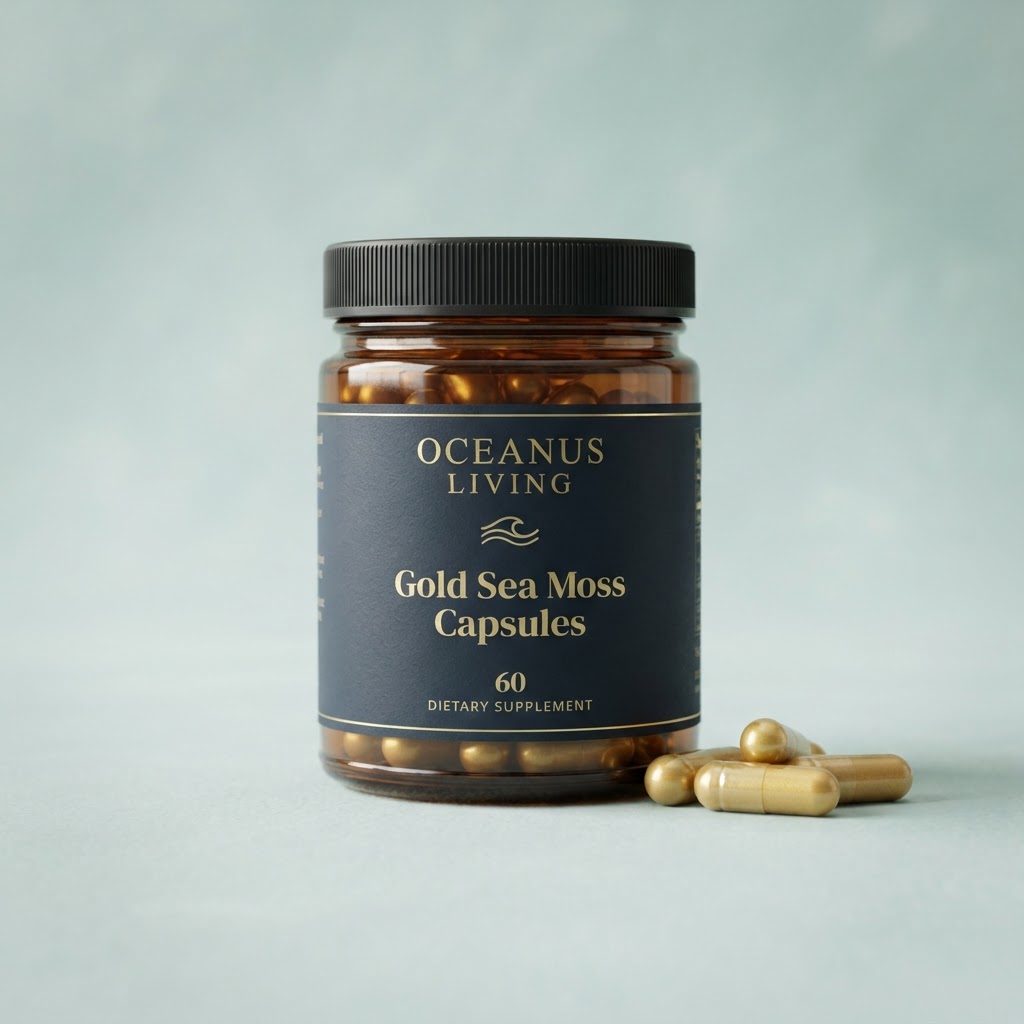
Same seaweed, different packaging. An honest comparison of taste, dosing, storage, travel and cost per day to help you pick the format you will actually keep using.
In this article
Sea moss gel vs capsules is the first real decision you make after deciding to try sea moss at all, and it matters less than the internet suggests — both are the same seaweed. What differs is how the moss has been processed, how it tastes, how precisely you can dose it, how you store it, and what it costs per day. Here is an honest comparison so you can pick the one you will actually stick with.
What is actually different
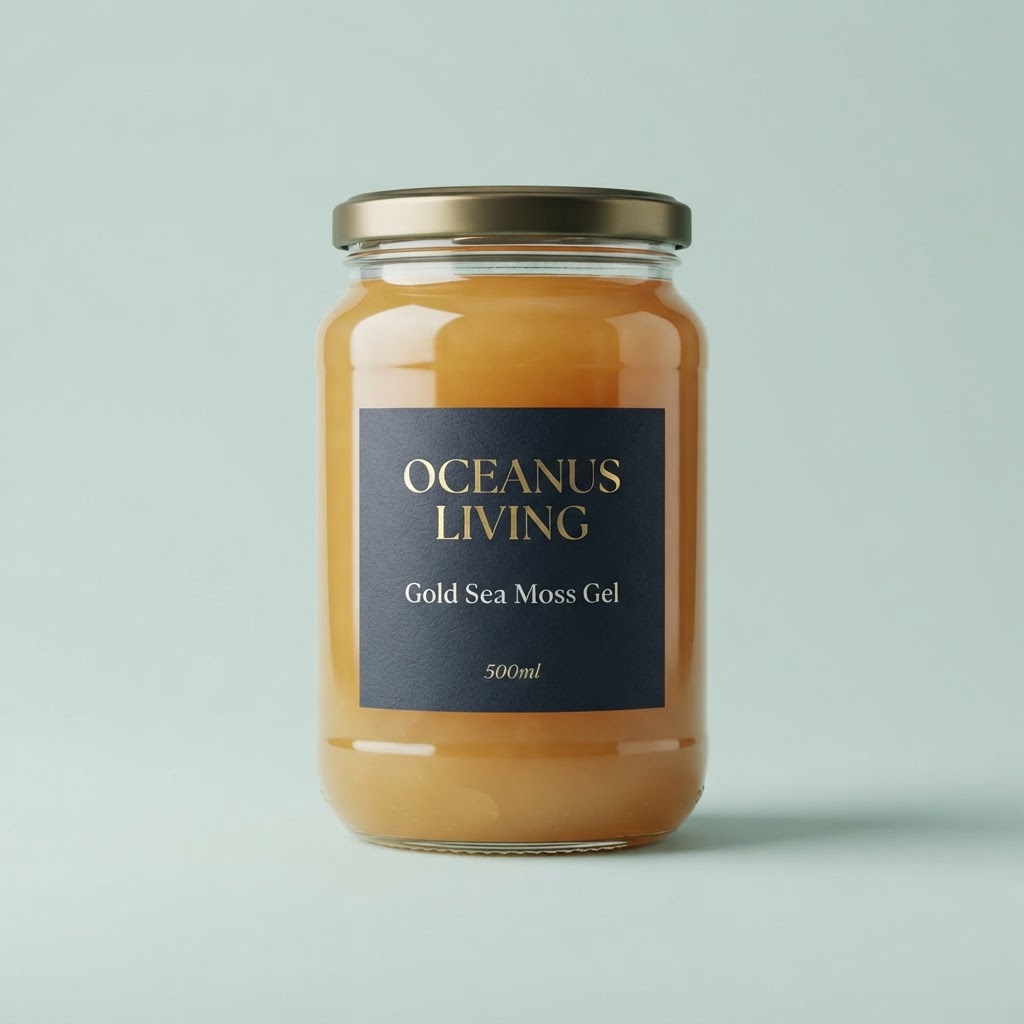
Gel is whole sea moss, rehydrated. Dried moss is rinsed, soaked in water until it swells, then blended into a smooth gel and jarred. Nothing is milled to powder and nothing is compressed. Our 500ml jar is roughly 30g of dried moss blended with spring water, plus lemon, lime and cinnamon.
Capsules are dried sea moss, milled to a powder and filled into capsule shells at 1000mg each. The moss has had the water taken out and is never put back — your body does the rehydrating.
So the difference is not the ingredient. It is water, particle size and packaging, which is why the practical differences below are what should decide it rather than any claim that one form is inherently superior.
Taste and texture
This is the honest dividing line, and worth being blunt about.
Gel has a taste. Plain sea moss gel is mild, faintly of the sea, with a slippery, set texture somewhere between aloe and loose jelly. Ours is blended with lemon, lime and cinnamon, which makes it much easier going straight from the spoon. Plenty of people take it that way. Plenty of others stir it into a smoothie, coffee, porridge or juice, where it disappears completely — the texture is far less noticeable once it is blended into something else.
Capsules have no taste and no texture. You swallow them with water and that is the end of it.
If you know you are texture-sensitive, do not talk yourself into gel on principle. The best format is the one still in use in six weeks.
Dose accuracy and serving size
Capsules win on precision. Each is 1000mg of dried moss and the daily dose is stated on the label, so there is nothing to measure and no variation between one day and the next.
Gel is measured by spoon: our serving is 2 tablespoons (30g) a day. That is accurate enough for daily use as long as you use a proper tablespoon rather than a guess, and it has one advantage capsules do not — you can see and smell what you are taking, and you would notice immediately if a jar were not right.
Travel, storage and shelf life
Gel is a fresh food with no preservatives. It lives in the fridge, has a use-by date and after-opening guidance on the jar, and needs a clean dry spoon each time. It freezes well, so portioning into an ice-cube tray is the standard fix for a jar you will not finish. It is not something to put in hand luggage.
Capsules need a cool, dry cupboard, keep for far longer, and travel anywhere without thought. For weeks away from a fridge, capsules are simply the practical answer.
Cost per day
Compare per day, not per pack.
Our gel is £25 for a 500ml jar, or £22.50 on a monthly subscription, at a 2-tablespoon (30g) daily serving — roughly [CHECK] servings per jar, so about [CHECK] a day. Our capsules are £20 for 60 x 1000mg capsules, or £18 on subscription, with the daily dose stated on the label — divide the pack by that dose for your cost per day [CHECK].
Both formats are 10% cheaper on subscription with free UK delivery, and both are cancellable whenever you like.
Iodine per day in each format — check the label
This is the part most comparisons skip, and it is the one worth reading twice.
Sea moss is a seaweed, and seaweeds contain iodine. The authorised claims for iodine are specific: iodine contributes to normal thyroid function, to normal cognitive function, to normal energy-yielding metabolism, to the maintenance of normal skin, and to the normal functioning of the nervous system. Those statements are about iodine as a nutrient — not about sea moss as a whole, and not a reason to take more than the stated serving.
Because iodine content varies with species, water, season and processing, the amount per daily serving is not the same in every batch or in every format, and we do not quote a single number for either. Check the label on your pack and the batch entry on our Lab Results page, where iodine per stated serving is given in micrograms and as a percentage of the 150µg Nutrient Reference Value.
For context on the range: NHS guidance is that up to 500µg of iodine a day from supplements is unlikely to cause harm, and EFSA's tolerable upper intake level is 600µg a day from all sources for adults. If you take both formats, or a multivitamin or kelp product alongside, add them together.
How to choose
Choose gel if you like the ritual of it, want to stir something into a morning drink or breakfast, do not mind a fridge item with a use-by date, and would rather see what you are taking. Our guide on how to use sea moss gel covers the practical side.
Choose capsules if taste or texture is the thing that would stop you, you want an exact dose with no measuring, you travel often, or you would rather not manage a chilled product at all.
Can you use both?
Yes, and some people do — gel at home, capsules for travel or busy weeks. One caution if you do: they both contain iodine, so treat them as one daily intake rather than two separate things, keep to the stated servings, and check both labels against the batch results rather than doubling up by default.
Whichever way you go, speak to a GP or pharmacist first if you have a thyroid condition, take thyroid medication, are pregnant or breastfeeding, or are considering sea moss for a child. We cannot advise on medication or individual circumstances.
Both formats are in the shop: the 500ml gel and the 60-capsule pack.
Oceanus Living
St Lucia Sea Moss Gel, 500ml
Ready to use, prepared in Kent and tested for heavy metals and iodine every batch.
View the gelFrequently Asked Questions
Related
[FOUNDER NAME]
Written and reviewed by the Oceanus Living team for accuracy and UK compliance.
Last updated 25 August 2026
This article is for general information only and is not medical advice. Food supplements should not replace a varied, balanced diet and healthy lifestyle. Oceanus Living products are not intended to diagnose, treat, cure or prevent any disease or condition. If you are pregnant, breastfeeding, taking medication, have a thyroid condition, or are considering use for a child, speak to a qualified healthcare professional first.